This area has the most colonial buildings and is the most visited area for tourists who visit Havana but it's also its most beautiful spot. Foreigners walking through the streets getting hustled by jineteros, taking pictures or just having a (Cristal) beer.
Habana's Vieja is famous for the Catedral de San Cristoal de la Habana at the Plaza de la Catedral, and for Hemingway's bar, "La Bodeguita del Medio", where you can buy an expensive mojito.
The colonial period, lasting nearly 400 years, gave Habana much of the Spanish colonial architecture that distinguishes it and led the United Nations Educational, Scientific and Cultural Organization (UNESCO) to designate the colonial core of the city, Old Havana, as a World Heritage Site in 1982.
While visiting the old part of Havana, Habana Vieja, you will notice the Spanish influences and how beautiful the buildings are rebuild with the money of UNESCO
Habana Vieja is also the part of Havana when you love terraces and live music, it is the most touristical part of Havana but really worth a day or two from your trip to Cuba.
Wild Bill's Pub Crawl is a unique half a day-, or full day tour, depending on your needs for mojitos, beers and other refrescos, along several bars and small restaurants in Habana Vieja (Old Havana)
Bars in this tour are: Floridita, Monserrate, Castillo de Farnes, Hanoi (restaurant), Lluvia de Oro, Café de Paris, La Muralla, O'Reilly, and end in the real typical Cuban peso bar Bilbao.
Tailormade by Bruce, an old friend of the Cuba-Junky website.
You can see the full tour by watching the video, another option is to download it on your Apple iPod and print out the description and the map, through the links below in this article, take with you to Havana and enjoy the tour
We completed the Old Havana Pub Crawl originally posted by Wild Bill before his passing. It was fantastic.
Capitolio Nacional
Capitolio Nacional
Calle Paseo del Prado
e/Calle Dragones y Calle San Jose
La Habana
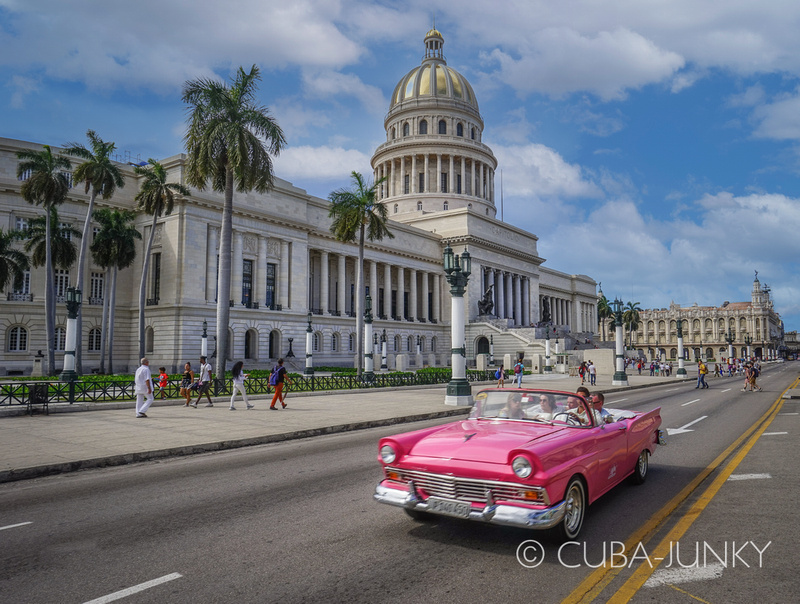
Built in 1929 as the Senate and House of Representatives (and said to be a replica of Washington DC's Capitol), this colossal building is recognizable by its dome which dominates the city's skyline. Inside stands the largest indoor bronze statue in the world representing Pallas Athena. Nowadays, the Museo Nacional de Historia Natural (the National Museum of Natural History) has its venue within the building and contains the largest natural history collection in the country.
In the surrounding areas of the Capitol, there are a few attractions worth visiting, among them, the Partagás cigar factory, the Parque Central (Central Park), and the Teatro Nacional (National Theathre) with its baroque façade.
Around Habana Vieja you will see many street performers, the lady with the big cigar (La Famosa), the two Beny More's, the woman who is reading the Tarot Cards for you and many more ...
One of them is the very happy Pillo Chocolate and usually walks around in Old Havana in the area of Plaza Catedral, Pillo , together with his two dogs (mother and daughter), are giving shows for the tourists.
You should see them in real life, his act is hilarious ... and don't forget to tip him ;)
Pillo Chocolate and his dogs are also very famous among the Havana locals too because he is a regular at the Havana baseball games
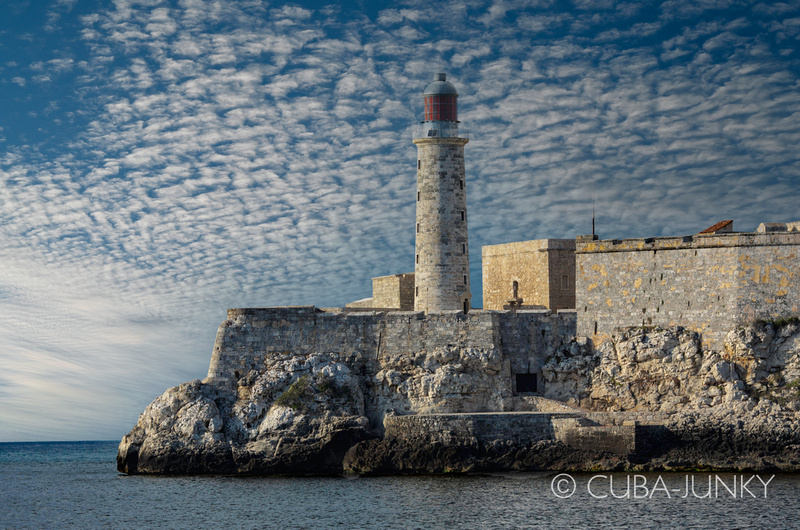
This fortress, together with Morro Castle (Castillo de los Tres Reyes del Morro), make up the Morro - Cabaña Historical Military Park, the most extensive museum in the country. Morro Castle is, in ftself, a museum piece that reveals the solutions of renaissance architecture applied to military strategy.
The fortress of San Carlos and San Severino de La Cabaña holds the most important collection of antique weapons in the country: a full-scale medieval catapult and battering ram; double-curved swords of Southeast Asia; the Indian Katar, a fearsone three-bladed dagger; the venerable katanas of the samurai; ornate Arabian rifles; and an entire battery of cannon cast in Seville in the 18th century.
When Havana was a walled city, every night at 9:00 p.m. La Cabaña fortress would fire one of fts cannon to announce the closing of the doors, a tradition preserved by the people of Havana to this very day. The impressive view from Morro Castle or La Cabaña takes in the entire harbor and the skyline of the city.
Open: Monday to Sunday: 09:00 to 20:00.
Daily: 21:00 Cannon Ceremony
Castillo San Salvador de la Punta
Esquina de Prado y Malecón
Habana Vieja
La Habana
This small fortress, at the western entry point to the harbour, played a crucial role in the defence of Havana during the first centuries of colonisation. Built in the 16th century, the four-sided construction gives visitors coming into Old Havana from the port an idea of the architecture this area of town has in store for them. The fortress still houses some twenty old guns and other military antiques.
Disabled access is available